

Health
What Does Third-Party Tested Mean on a Supplement Label?
On a U.S. supplement, third-party tested means someone other than the brand checked the product. It is not an FDA approval, and the phrase alone does not say who tested or for what. Here is what the main seals cover and how to look a product up in a public listing.
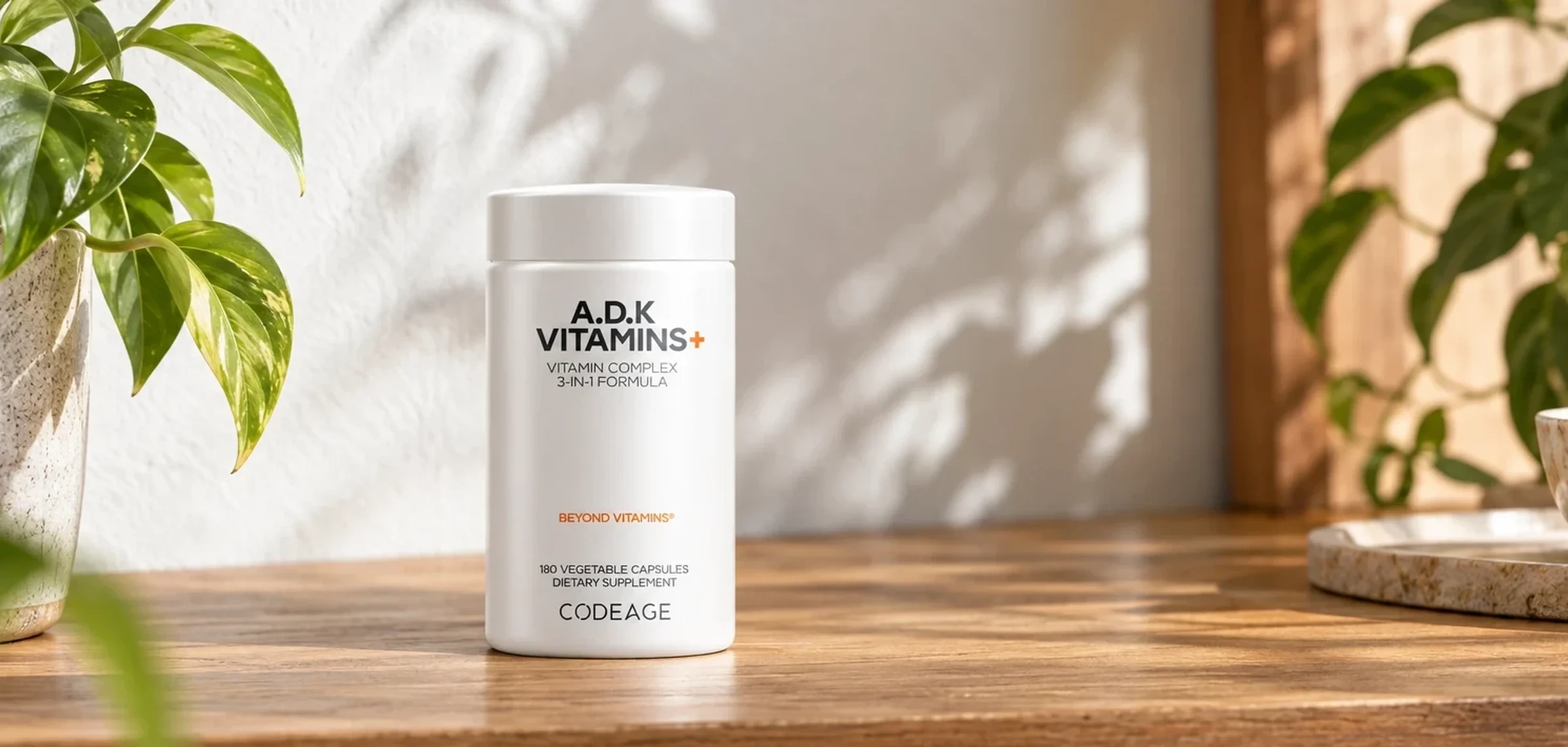

Codeage promo code: TROVEMONT10, 10% off, recorded Oct. 30, 2026. We may earn a commission.
On this page

The essentials
Key takeaways
- The FDA has no authority to approve dietary supplements before they are marketed, and it does not test them before they are sold.
- NSF certification checks the label claim, the ingredients' toxicology and contaminants; USP Verified also checks that the product breaks down within a specified time.
- NSF Certified for Sport adds a screen for 280 substances banned by most major athletic organizations.
- A certification belongs to one product, not to a brand: look up the exact product name in the certifier's public listing.
- According to the National Institutes of Health, these seals do not guarantee that a product is safe or effective.
Who checks a supplement before it reaches the shelf?
Mostly the company that makes it. In its questions and answers on dietary supplements, the Food and Drug Administration says it has no authority to approve supplements before they are marketed and does not test them before they are sold: the firm is responsible for a product that is safe and labeled truthfully. What the law does require is a way of working. Anyone who manufactures, packages or holds supplements has to follow current good manufacturing practices, which the National Institutes of Health describes as rules meant to ensure a product's identity, purity, strength and composition, and the FDA inspects facilities from time to time.
That leaves a gap between "made under the rules" and "this bottle was checked". Independent testing fills it, and it is voluntary. The NIH's Office of Dietary Supplements notes that several independent organizations test supplements and let the products that pass carry a seal. According to the NIH, such a seal indicates that the product was properly manufactured, contains the ingredients listed on its label and does not contain harmful levels of contaminants.
What does each seal actually cover?
"Third-party tested" on its own names no one. A certification mark does, and each mark publishes what it checks.
| On the label | Who stands behind it | What is checked | Where to verify |
|---|---|---|---|
| NSF certified | NSF, against the standard NSF/ANSI 173 | The label claim (what the label lists is in the bottle), a toxicology review of the ingredients, and contaminants and undeclared ingredients | NSF's public listings, by company or product |
| NSF Certified for Sport | NSF | Everything above, plus a screen for 280 substances banned by most major athletic organizations | The Certified for Sport product search |
| USP Verified | U.S. Pharmacopeia | Ingredients in the declared strength and amounts, no harmful levels of specified contaminants such as heavy metals and pesticides, manufacture under FDA good manufacturing practices, and a product that breaks down within a specified time | USP's list of verified products |
| "Third-party tested", no name given | Not stated | Not stated | Ask the brand which laboratory, for which batch |
Two details in that table are easy to miss. NSF says it tests in its own laboratories instead of reviewing data sent by the manufacturer, and that it audits every year and retests certified products periodically, so a certification is not a one-time event. And when no organization is named, the FDA's own advice applies: a consumer may ask the manufacturer, or a commercial laboratory, for an analysis of what a product contains.
Three questions that sort a real claim from a slogan
- Who tested it? A named organization with a public listing can be checked. "An independent lab" cannot, until the brand says which one.
- What was it tested for? The amount of each ingredient, contaminants and banned substances are three different jobs. A mark covers the ones it lists, and no others.
- Is this exact product on the list? Certification belongs to a product, in a given form, made at a given facility. It does not belong to a brand.
The third question is the one people skip. A company can hold a certification for one formula and none for the formula next to it on the shelf.
A worked example: looking a brand up in two minutes
Take Codeage, a supplement brand that sells capsules and powders online. Its certification is easy to check because NSF publishes it.
NSF's official listings, which state that they were current as of November 23, 2026, show Codeage LLC under NSF/ANSI 173 with 64 certified products. Multi Collagen Peptides, Methylfolate B Complex+ and Liposomal NMN are among them. Each line gives the product's name, its form (capsule or powder) and the manufacturer's recommended daily serving.
Codeage says the same thing from its side, and in a useful way: its Science and Standards page states that checks and certifications vary from one formula to another, and that the NSF mark appears on select formulas. That is the honest version of a quality claim, and it tells a buyer what to do:
- open the NSF listing and search the company;
- find the product by its exact name and form;
- if it is there, the certification covers that product; if it is not, that product is not NSF certified, and any testing claim on it is one to ask the brand about.
The same three steps work for any brand, with NSF's listing or USP's.
What a seal does not tell you
It does not tell you that a supplement works, or that it suits you. The NIH is direct about it: the seals do not guarantee that a product is safe or effective. They answer a narrower question, which is whether the bottle contains what the label says and stays under the limits for contaminants.
The absence of a seal is not a verdict either. No rule requires one, so plenty of products carry none, and their makers still have to follow the manufacturing rules above. A seal moves a product from "the company says so" to "someone else looked", which is worth having, and is all it is.
This article is general information, not medical advice. Talk to a doctor or a pharmacist before starting a supplement, especially if you take medication, are pregnant or are nursing. Statements made by sellers of dietary supplements have not been evaluated by the Food and Drug Administration; supplements are not intended to diagnose, treat, cure, or prevent any disease.
The stores
Stores named in this article
- Coupon codeExclusive
Codeage
10%OFF
10% off at Codeage with code TROVEMONT10
Enter TROVEMONT10 at checkout on Codeage. Discount as read on Oct. 25, 2026.
Get codeUse at checkoutTROVEMONT10
Questions & answers
Questions people also ask
Does the FDA approve dietary supplements before they are sold?
No. The FDA states that it does not have the authority to approve dietary supplements before they are marketed, and that it does not test them before they are sold to consumers. The company that makes or distributes a supplement is responsible for its safety and for a truthful label, and it must follow current good manufacturing practices.
Can one brand have both certified and uncertified products?
Yes. A certification is granted to a product, and NSF's listing names each certified product one by one, with its form and serving. A brand can therefore hold a certification for some formulas and not for others, which is why the exact product name is the thing to search for, not the brand.
How often is an NSF certified supplement checked again?
NSF says it audits every year and retests each certified dietary supplement periodically, in its own laboratories. Its public listing states the day on which it was current, which makes the listing a better thing to check than a seal printed on a label some time ago.
Our research
Sources
- Dietary Supplements: What You Need to KnowNational Institutes of Health, Office of Dietary Supplements · ods.od.nih.gov · Retrieved
- Questions and Answers on Dietary SupplementsU.S. Food and Drug Administration · fda.gov · Retrieved
- Supplement and Vitamin CertificationNSF · nsf.org · Retrieved
- USP Verified MarkU.S. Pharmacopeia · usp.org · Retrieved
- NSF Official Listings: Codeage LLC, NSF/ANSI 173 Dietary SupplementsNSF · info.nsf.org · Retrieved
- Science and Standards: The Codeage ApproachCodeage · codeage.com · Retrieved
Every fact in this article comes from one of these references. Open them and check.